
Comb Honey Prices and Natural Artvin Comb Honey
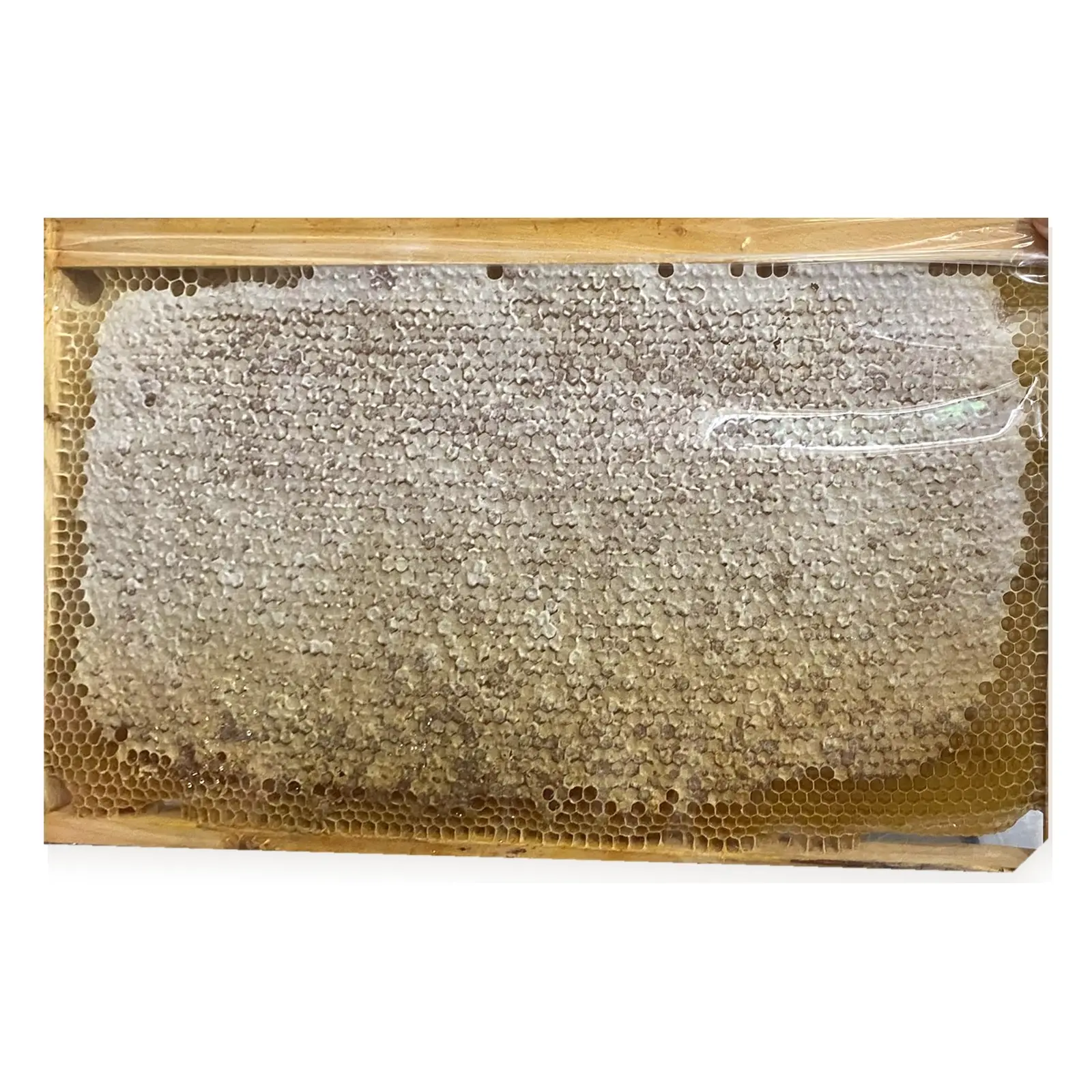
1 productsGenuine comb honey offered unstrained and unheated in the honeycomb built by the bees themselves. It is cut from our hives in the Kaçkar highlands together with its wax and placed in the jar as it is; it is served with a knife, not a spoon. For photos from Artvin's highlands, villages and flower meadows, browse our gallery.
Comb Honey Prices
Comb Honey 3000 g
About Artvin Comb Honey
Comb honey has never gone through extraction. Bees build the honeycomb from the wax they secrete; its cells are hexagonal because this shape encloses the same volume with the least wax. Once bees cap the cells, the comb is cut and sold with its wax, whereas extracted honey is separated from the comb in a machine. This single difference makes comb honey the least processed form of honey: its pollen, traces of propolis and beeswax remain in place. We produce it in our own hives and with beekeepers we work with in Artvin villages and highlands on the foothills of the Kaçkar Mountains, above 1,200 meters (3,940 ft), using Caucasian honey bees. We wait for the comb to be capped and harvest according to the condition of the comb rather than the calendar; capping is the bees’ own sign that the moisture content has matured.
- Offered unstrained, together with the comb built by the bees
- Produced above 1,200 meters on the foothills of the Kaçkar Mountains
- Produced with Caucasian honey bees
- Beeswax, pollen and traces of propolis remain in place
- No heat treatment is applied
- Consumed cut with a knife, together with its wax
- Production is more limited than extracted honey
How Can You Recognize Genuine Comb Honey? Five Checks at Home
Imitation comb is often made by filling a moulded wax sheet with syrup. Here are signs you can inspect before and after opening the jar.
- How the wax feels in the mouth: In reality, beeswax does not melt in the mouth; as it is chewed, it gets smaller and remains in one piece like gum. If suspicious, it breaks up quickly or leaves an oily film on the palate.
- Regularity of the cells: In reality, hexagons are regular but not exactly identical; edges may curve and colors vary. If suspicious, cells look ruler-perfect and identical in size everywhere.
- The capped surface: In reality, the cap is matte, creamy white; honey seeps out underneath when touched with a knife. A few empty cells at the edge are normal. If suspicious, the cap is shiny and uniform, and a thin liquid runs out when cut.
- How the honey flows: In reality, honey descends slowly from the cut surface in a thick thread. If suspicious, it flows quickly like water; this can indicate high moisture and an early harvest.
- Aroma and taste: In reality, its aroma is mild and floral, and its flavor opens in layers in the mouth. If suspicious, it smells of caramel or burnt sugar and leaves a one-dimensional sweetness.
These checks can raise suspicion; they are not proof. Comb filled after feeding bees sugar syrup is made of genuine beeswax and cannot be distinguished by sight; only laboratory analysis gives a definitive result. Our comb is cut from the hive with its wax and bees are not fed syrup for harvest.
Where Can You Buy Comb Honey?
Our comb-honey production is limited: a hive does not yield as much comb as extracted honey, because the comb must be cut without destroying what the bees have built, so it can sell out early in the season. You can ask us directly on WhatsApp about remaining stock, harvest time and shipping, or select the jar you prefer with “Add to cart”. Payment is by bank transfer to a Turkish bank account (EFT/havale).
- Directly from the beekeeper, no wholesaler
- Orders before 16:00 ship the same day
- Delivery across Türkiye
- We pay return shipping for defective items
Frequently Asked Questions
How Do You Strain Comb Honey or Melt It at Home?
You do not have to strain it; comb honey is sold to be eaten with its wax. If you still want to strain it, chop the comb in a wire strainer over a bowl and leave it at room temperature for a few hours; the honey will flow down under its own weight and the wax will remain in the strainer. Do not melt the comb on the stove: heat mixes wax into the honey and harms its aroma and enzymes.
What Is the Price per Kilo of Comb Honey, and Why Is It More Expensive Than Extracted Honey?
The price per kilo is higher because bees build the comb from scratch, so less comb comes from each hive and it must be cut without breaking it. The current price and jar size are shown in the product card above. It is sold at producer price because there is no intermediary; contact us on WhatsApp for stock and shipping.
Why Can Comb Honey Be Black or Dark?
Its color comes from two things: the source of the honey and the age of the comb. Dark honeys such as chestnut honey make the comb look dark as well. Old combs used by bees for years darken with pollen and cocoon residue; these are called dark combs, and log-hive honey is often dark for this reason. A dark color is neither spoilage nor a sign of freshness.
Can Comb Honey Get Moth Larvae? Can an Infested Comb Be Eaten?
It will not develop larvae in a closed jar. This happens when wax moths lay eggs on comb left exposed; a closed container prevents them reaching the comb, so close the jar after every use. Do not eat an infested comb: silky tunnels and dust appear in the wax. Although honey itself may not spoil, separating the wax in this condition is not practical.
Where Is Comb Honey Produced? Is It the Same as Log-Hive Honey?
Both are sold in comb, but the hives differ: a log hive is hollowed from a tree trunk and the bee builds its comb freely, while comb honey is cut from a framed hive. Ours comes from hives in Artvin villages and highlands in the Kaçkar Mountains above 1,200 meters.
How Is Comb Honey Eaten? Can You Eat the Wax?
Cut off a slice with a knife and eat it with the wax; beeswax is harmless and may be swallowed after chewing or discarded like chewing gum. Both are fine. It is commonly eaten at breakfast with butter and cheese or placed on bread. One slice at a time is enough.
What Are the Benefits of Comb Honey? How Many Calories Does It Have?
Because it is neither strained nor heat-treated, its pollen, traces of propolis and beeswax remain intact; it is traditionally preferred at breakfast as a source of energy. Its calories are comparable to extracted honey, while beeswax provides no calories because it is not digested. Honey is a food, not a medicine.
How Should Comb Honey Be Stored? Does It Need Refrigeration?
Store it in a closed container at room temperature away from sunlight. A refrigerator or freezer is unnecessary; cold hardens the wax and makes it difficult to cut. Do not heat it: heat melts the wax and harms the honey’s aroma and enzymes. Use a dry knife each time.