
Log-Hive Honey Varieties and Prices
1 productsUnstrained Artvin log-hive honey matured in the bees’ own comb cells in traditional tree-trunk hives. It is harvested once a year in the Kaçkar highlands and production is limited. For photos from Artvin's highlands, villages and flower meadows, browse our gallery.
Log-Hive Honey Prices
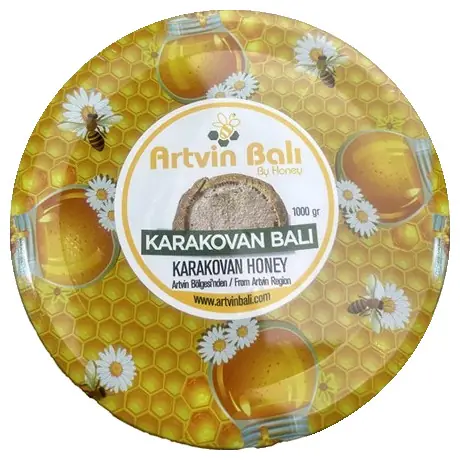
Kaçkar Karakovan Honey 1000 g
About Artvin Log-Hive Honey
Artvin log-hive honey is unstrained honey sold with the comb cells that bees create in traditional hives made from hollow logs. Since the comb is harvested intact, the honey undergoes no processing; beeswax, pollen and propolis remain as they are. This method yields far less honey per hive than extraction and is harvested once a year, which explains its price and limited stock. It is eaten by chewing the comb. It is produced with Caucasian honey bees in highlands above 2,000 meters in the Kaçkar Mountains; when the cells are opened, its aroma and texture are distinctly different from extracted honey.
- Natural, unstrained and free of additives
- Produced above 2,000 meters
- Harvested from traditional tree-trunk hives on the foothills of the Kaçkar Mountains
- Produced by Caucasian honey bees
- Sourced from highland flowers; bees build the comb themselves
- Comes with beeswax, pollen and traces of propolis
- Crystallizes late in the comb and keeps for a long time
The Difference Between Log-Hive, Comb and Extracted Honey
All three come from hives in Artvin; what differs is the hive in which honey is produced and whether it is extracted. There is no such product as ‘log-hive honey in a modern framed hive’: the hive itself defines a log hive.
| Log-hive honey | Comb honey | Extracted honey | |
|---|---|---|---|
| Hive | Traditional hive hollowed from a tree trunk | Modern framed hive | Modern framed hive |
| Comb | Bees build wax from scratch | Bees build on ready-made foundation comb | The emptied comb is returned to the hive |
| Extraction | None; comb is cut intact | None; comb is cut and sold | Yes; comb is spun in a machine |
| Harvest | Once a year, hive by hive | Throughout the season from capped frames | Throughout the season, multiple times |
| Yield per hive | Lowest | Low | High |
| Price per kilo | Highest | Middle | Most economical |
| How it is eaten | Chewed with wax | Chewed with wax | With a spoon |
Where Can You Buy Log-Hive Honey?
Because log-hive production is limited, stock changes by season; message us on WhatsApp before ordering to ask about current availability and receive a same-day reply. The product comes directly from the beekeeper who tends the hive, with no wholesaler in between. Payment is by bank transfer to a Turkish bank account (EFT/havale) and orders confirmed before 16:00 (GMT+3) are dispatched the same day; we add protective packing so the comb is not damaged.
- Directly from the beekeeper, no wholesaler
- Orders before 16:00 ship the same day
- Delivery across Türkiye
- We pay return shipping for defective items
Frequently Asked Questions
What Is Log-Hive Honey?
A ‘karakovan’ is a traditional hive hollowed from a tree trunk; instead of building on a prepared frame, bees build the comb themselves inside the log. Log-hive honey is the honey that comes from this hive with its comb, without extraction. It differs from ordinary honey in the hive and in the absence of an extraction step; the table above places the three methods side by side.
How Can You Recognize Genuine Log-Hive Honey?
Because bees build the cells by hand, they are irregular: rows may curve and cell sizes differ. Honey built on ready-made foundation comb has perfect hexagons and straight rows. Honey flows slowly from a cut surface and the wax does not break apart when chewed. These are clues, not proof: the most reliable route is honey whose producer and hive are known.
What Is the Price per Kilo of Log-Hive Honey, and Why Is It Expensive?
The current per-kilo price is shown in the product card above; because we sell this category only in a 1 kg size, the card price is directly the per-kilo price. It is costly because yield is low: bees build wax from scratch, so the same effort produces much less honey, log hives are made by hand and harvest takes place once a year.
What Is Log-Hive Honey Good For?
Traditionally it is preferred for throat irritation, breakfast energy and seasonal transitions; chewing it with the comb keeps honey in the mouth longer. Its difference from extracted honey is that it is unprocessed, not a known treatment effect. Honey is a food and does not replace any treatment or medicine.
Where Does Log-Hive Honey Come From? Where Is It Produced?
In Türkiye, log-hive honey is first associated with Hizan in Bitlis, Pervari in Siirt and Bingöl; in the eastern Black Sea, Borçka, Camili (Macahel) and the Yusufeli area of Artvin are known. Our log hives stand in villages and highlands around Ardanuç; we do not sell honey from other regions.
How Is Log-Hive Honey Consumed? Can the Comb Be Eaten?
It is consumed with its comb by chewing; beeswax is harmless and can be discarded after chewing like gum or swallowed. Serve it in small pieces at breakfast with cheese and butter. No honey of any kind should be given to infants under one year old.
What Are the Color and Taste of Log-Hive Honey Like?
Its color ranges from dark amber to brown and its wax is dark yellow; it does not resemble the clear appearance of extracted honey. Its taste is intense and its aroma pronounced. Because it is not extracted, beeswax, pollen and traces of propolis remain with the honey, and it receives no heat treatment. Honey is a food, not a medicine.
How Should Log-Hive Honey Be Stored?
Store comb honey at room temperature between 18 and 24 °C in a dry place away from sunlight. Refrigeration is unnecessary because it hardens the wax. Keep the container closed, as comb absorbs odors quickly. Take cut pieces with a clean, dry spoon.